



Kežmarok Cultural Center
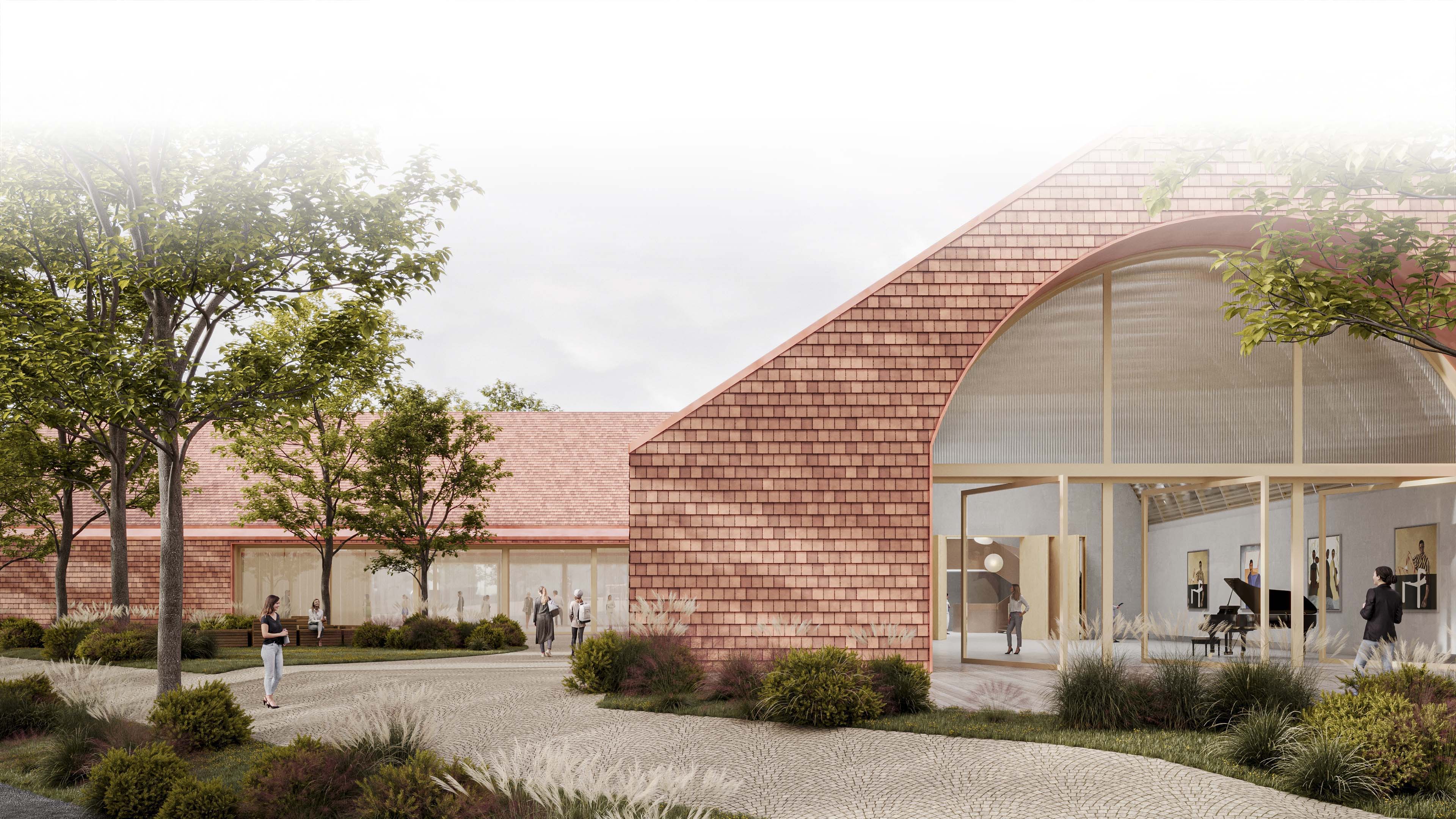
KežmarokThe design is based on the strong visual and cultural identity created by the context of the three churches. This relationship becomes the main conceptual layer of the proposal, seeking balance and hierarchy in order to cultivate the urban environment for different groups of users. Three new standalone buildings complete the composition of the site: a cultural building, a community building, and a commercial pavilion. Their spatial arrangement refers to the motif of the sacred Greek cross, whose rotation generates important intermediate spaces and new pedestrian connections beyond the site itself. Each building is expressed through a distinct architectural character. The cultural building is L-shaped with ceramic cladding, the community building is defined by a rectangular concrete volume, and the circular bistro pavilion is designed with a fully glazed façade and an accessible roof. The architectural language works with circular openings, arches, and pitched roof forms. The cultural building is organized into two wings — one containing the main hall, the other accommodating the foyer, small hall, and retail units. Between them, a service core with public facilities connects directly to the public space. The library is designed as a three-bay layout with centrally positioned service spaces. Both main buildings include underground parking, while the ground floor remains visually open and permeable. The public realm is structured through three key spatial elements: the promenade, the circle, and the square. The promenade connects active ground floors and main entrances, while forming a diagonal urban link toward the planned town hall. The square becomes the central civic space, oriented toward the Articular and Evangelical churches and connected to the historic pedestrian axis lined with trees. Green areas, fountains, terraces, and a wooden playscape create an active public environment adaptable for markets, festivals, and concerts throughout the year. The accessible roof of the circular pavilion extends public activity vertically, functioning as an amphitheatre, viewpoint, and informal gathering space. The proposal aims to create a contemporary urban environment that builds on the historical identity of the place.
studio: Mooods
team: Patrik Domanický
scope: Competition proposal
area: 1,9 ha
client: mesto Kežmarok
locality: Kežmarok
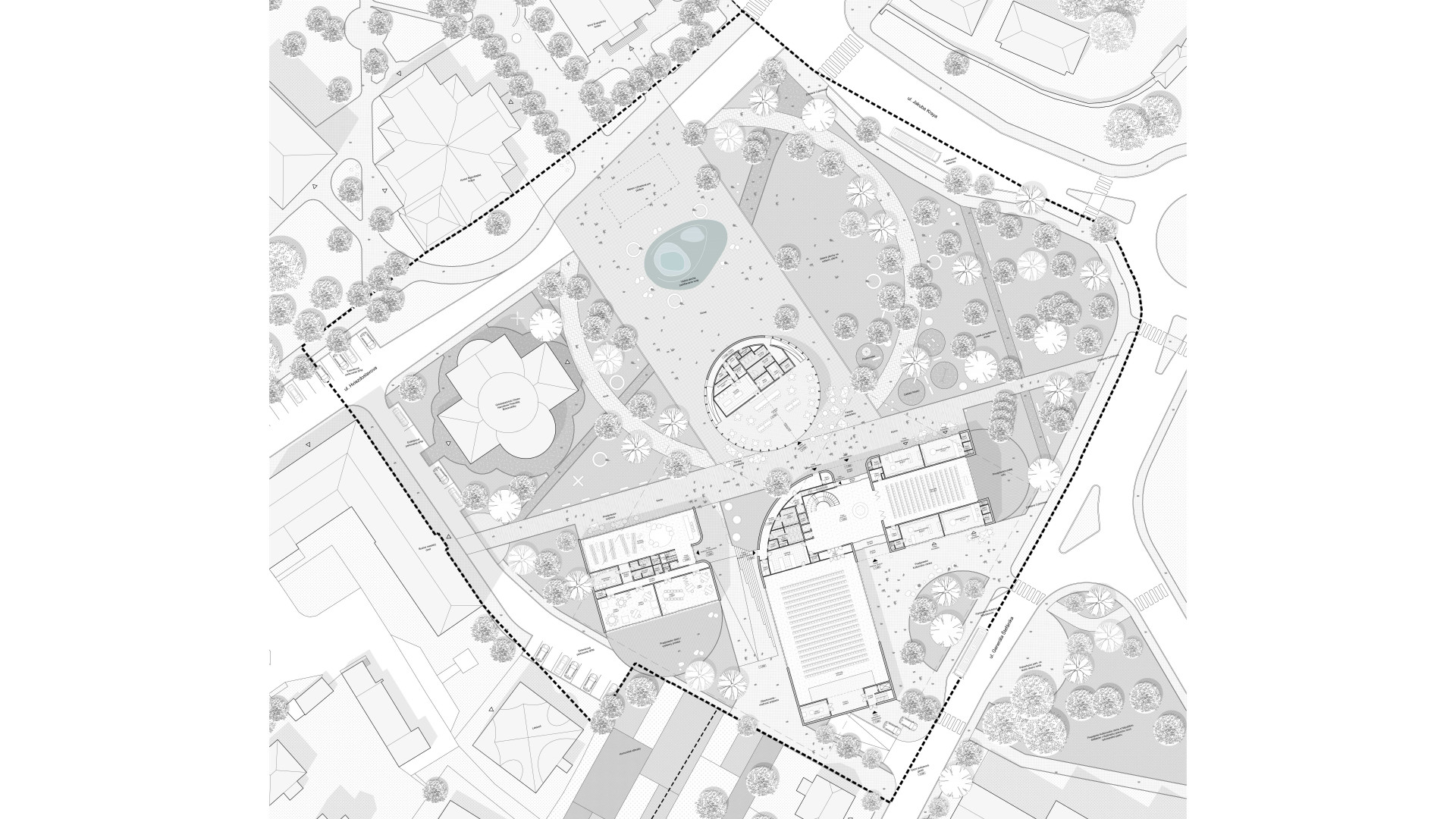
Situation
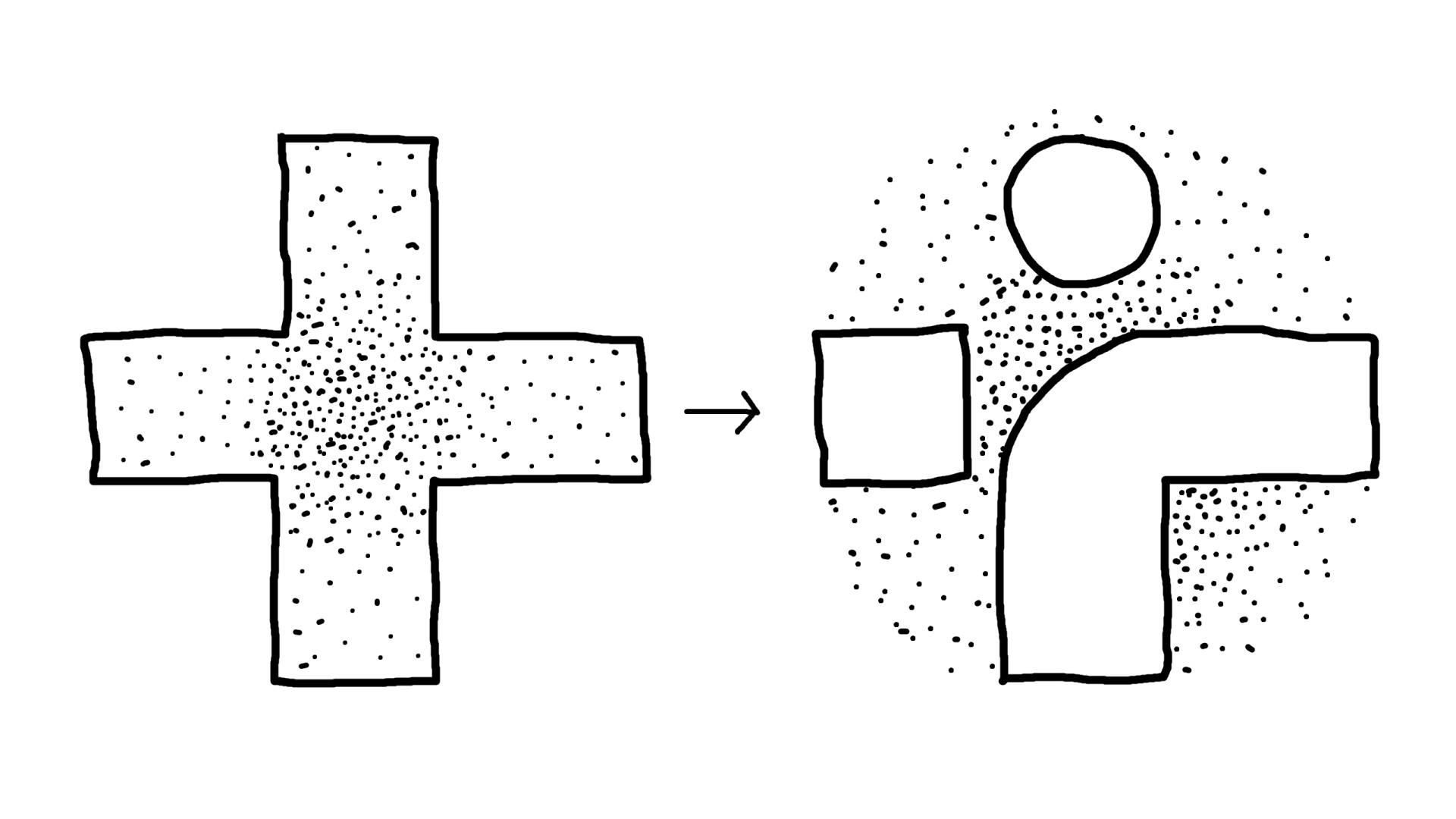
Concept - Urban Planning
the motif of the inversion of sacred introversion into an open urban structure
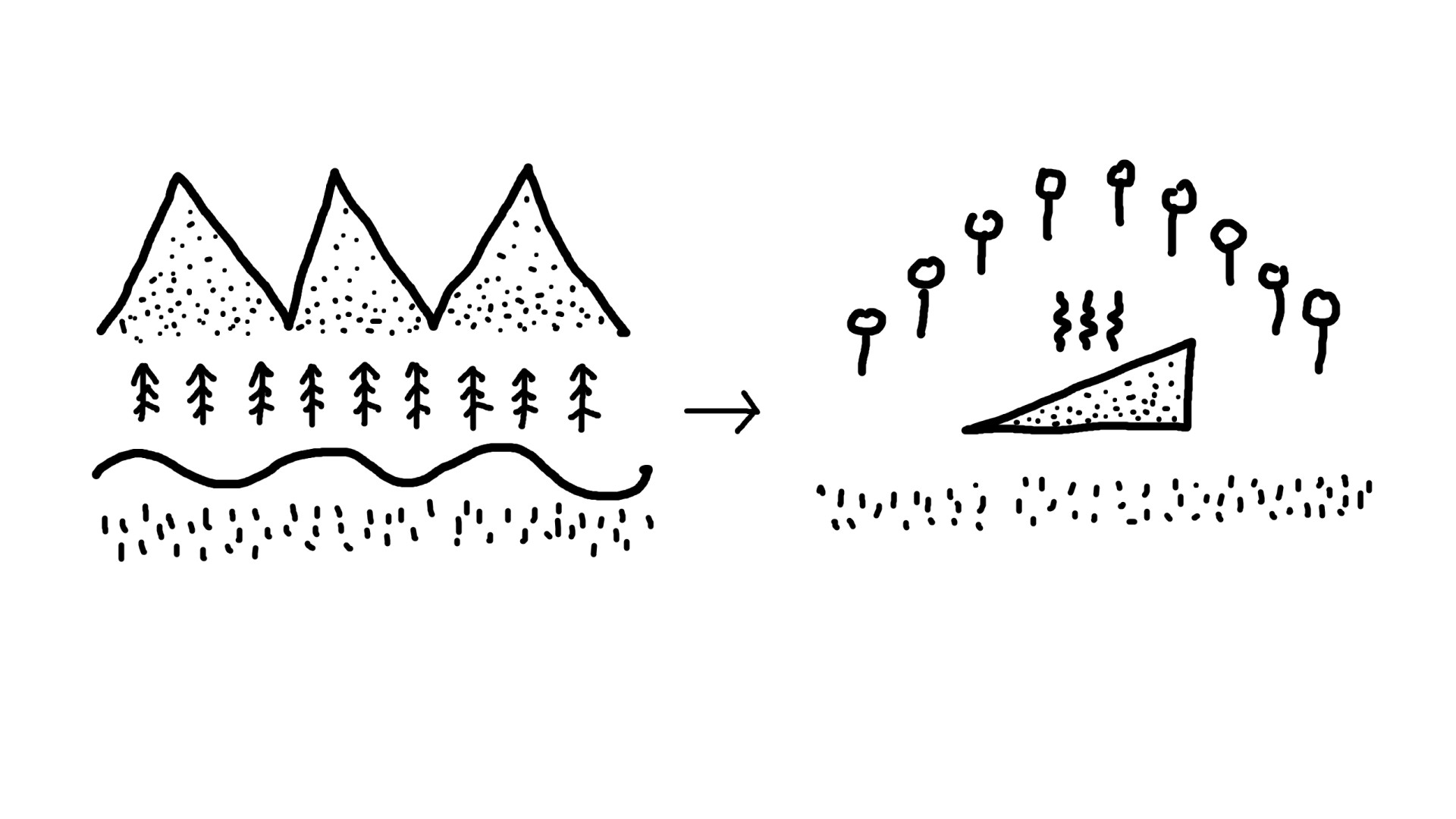
Concept - Landscape
the concept of integrating Kežmarok’s natural surroundings into the urban environment
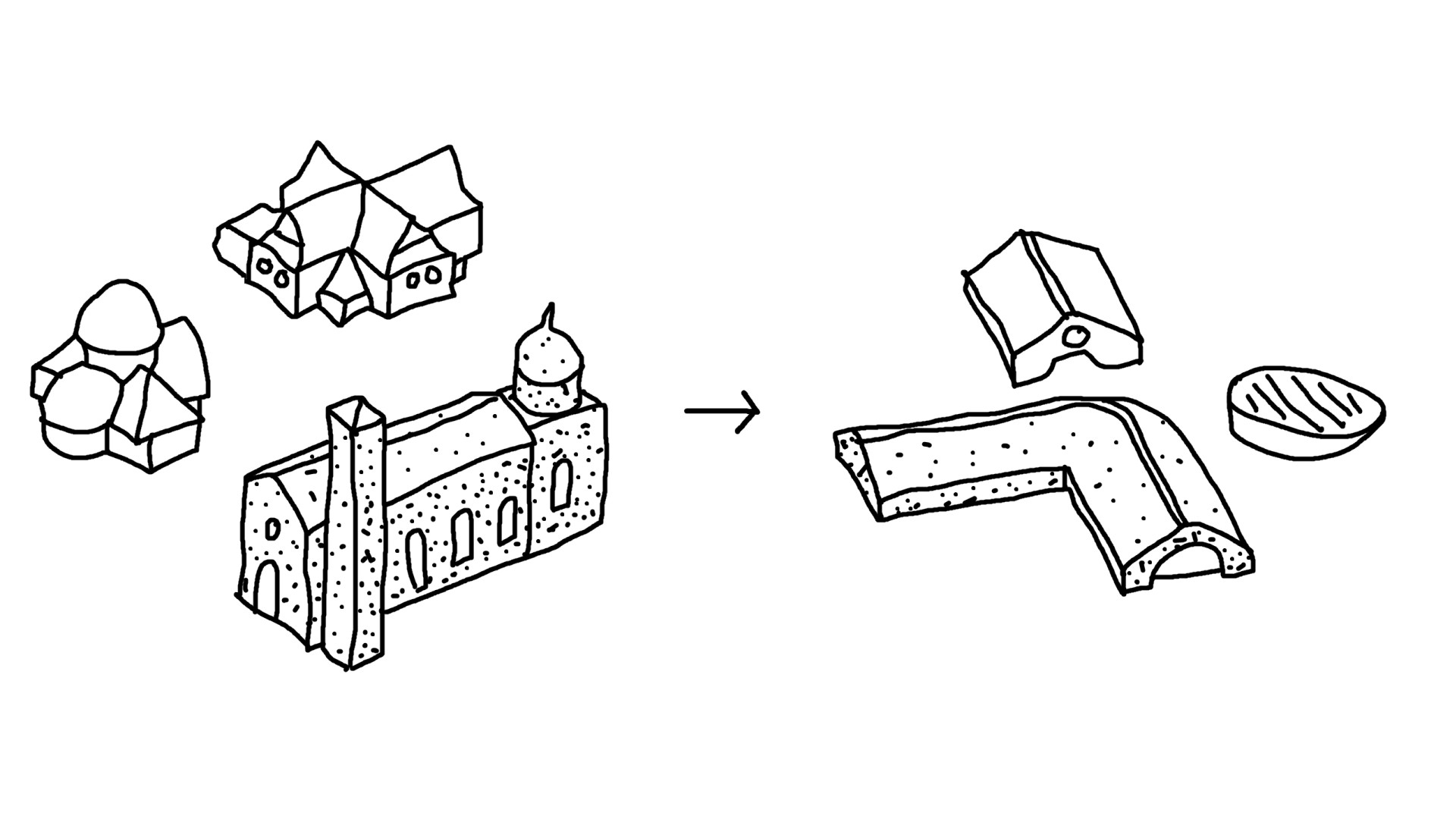
Concept - Architecture
the theme of transforming the formal elements of sacred architecture into a new form
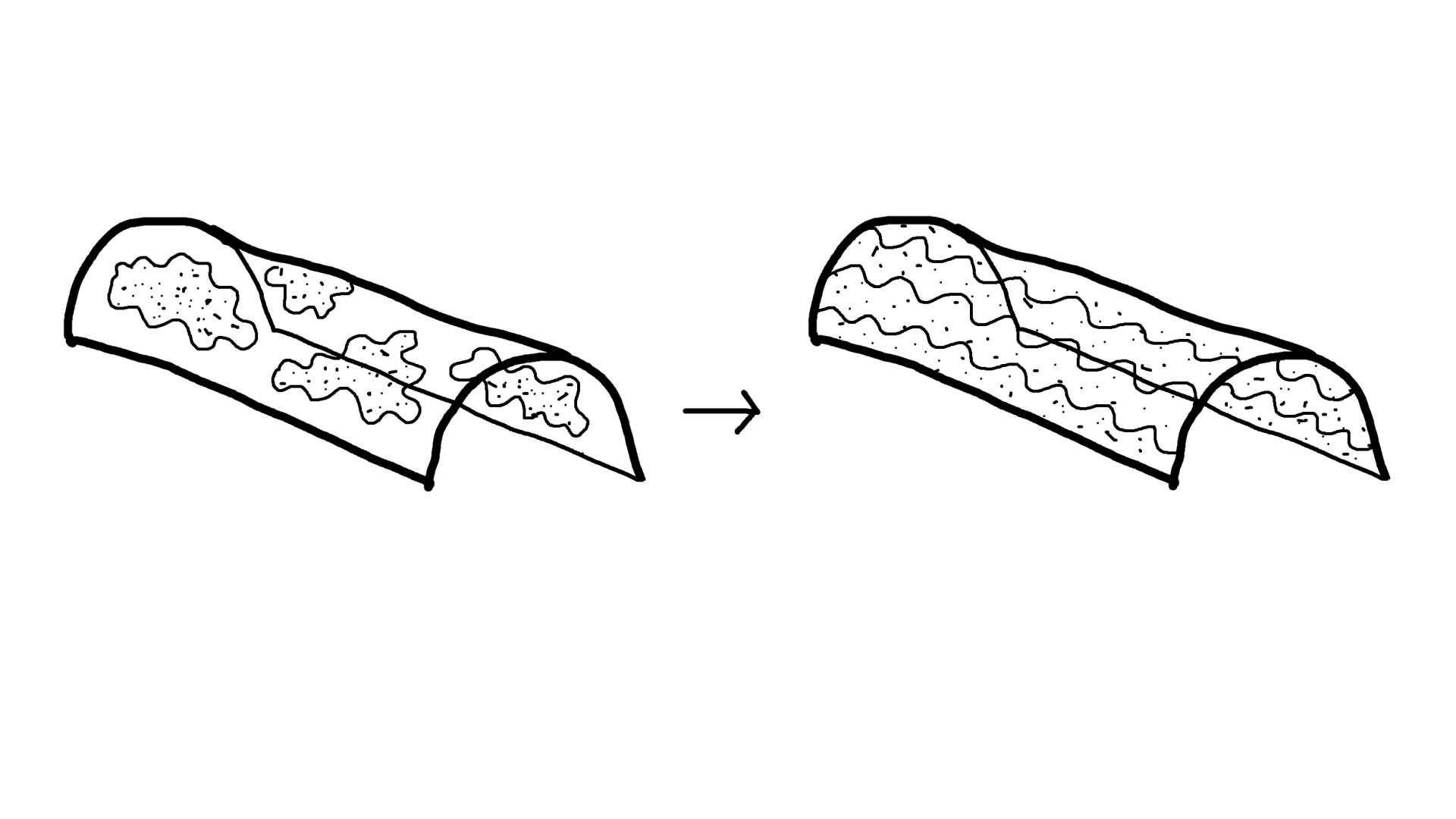
Concept - Details
the motif of an abstract wooden vault rendered as a suggestive textile membrane
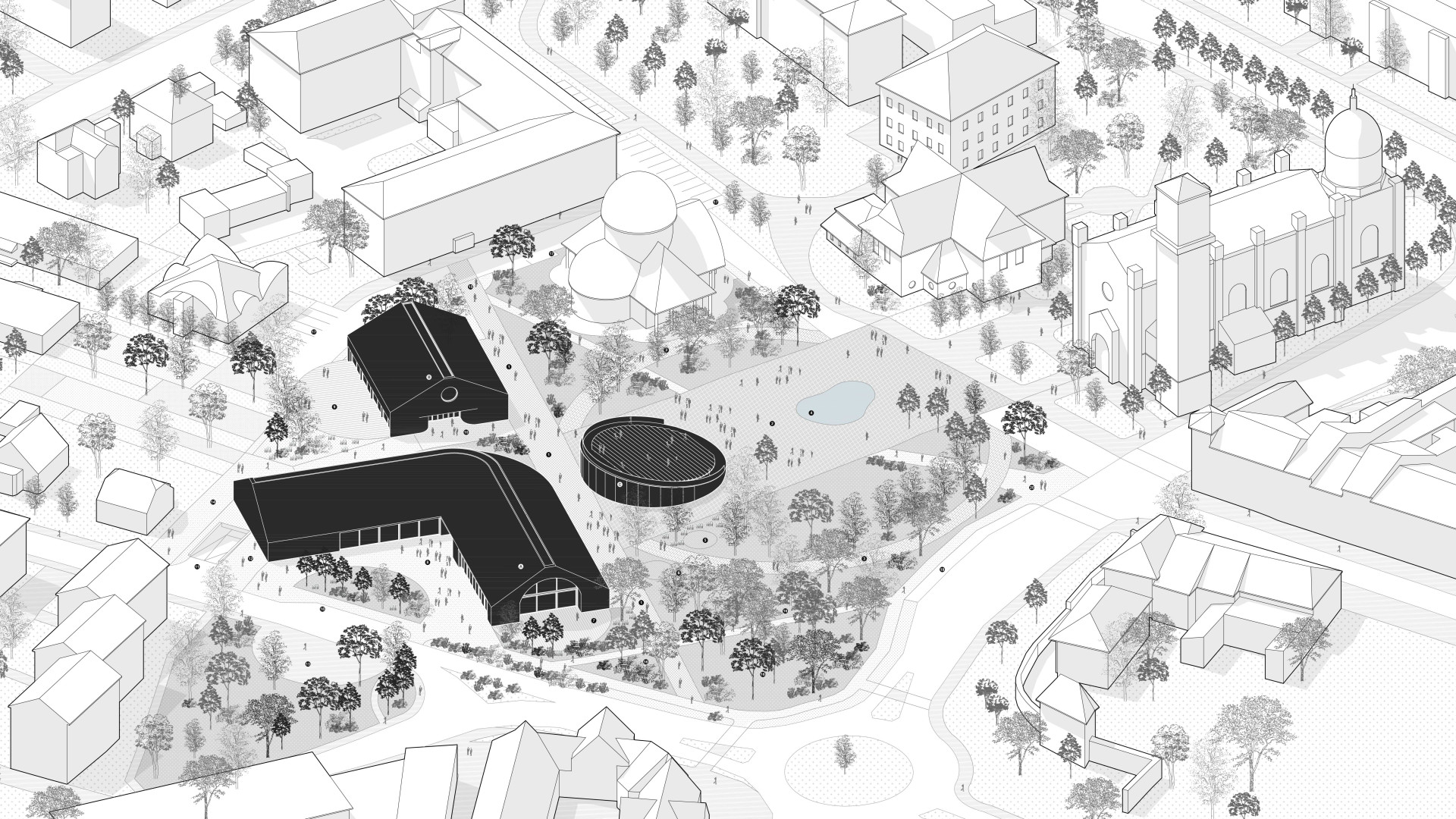
Axonometry
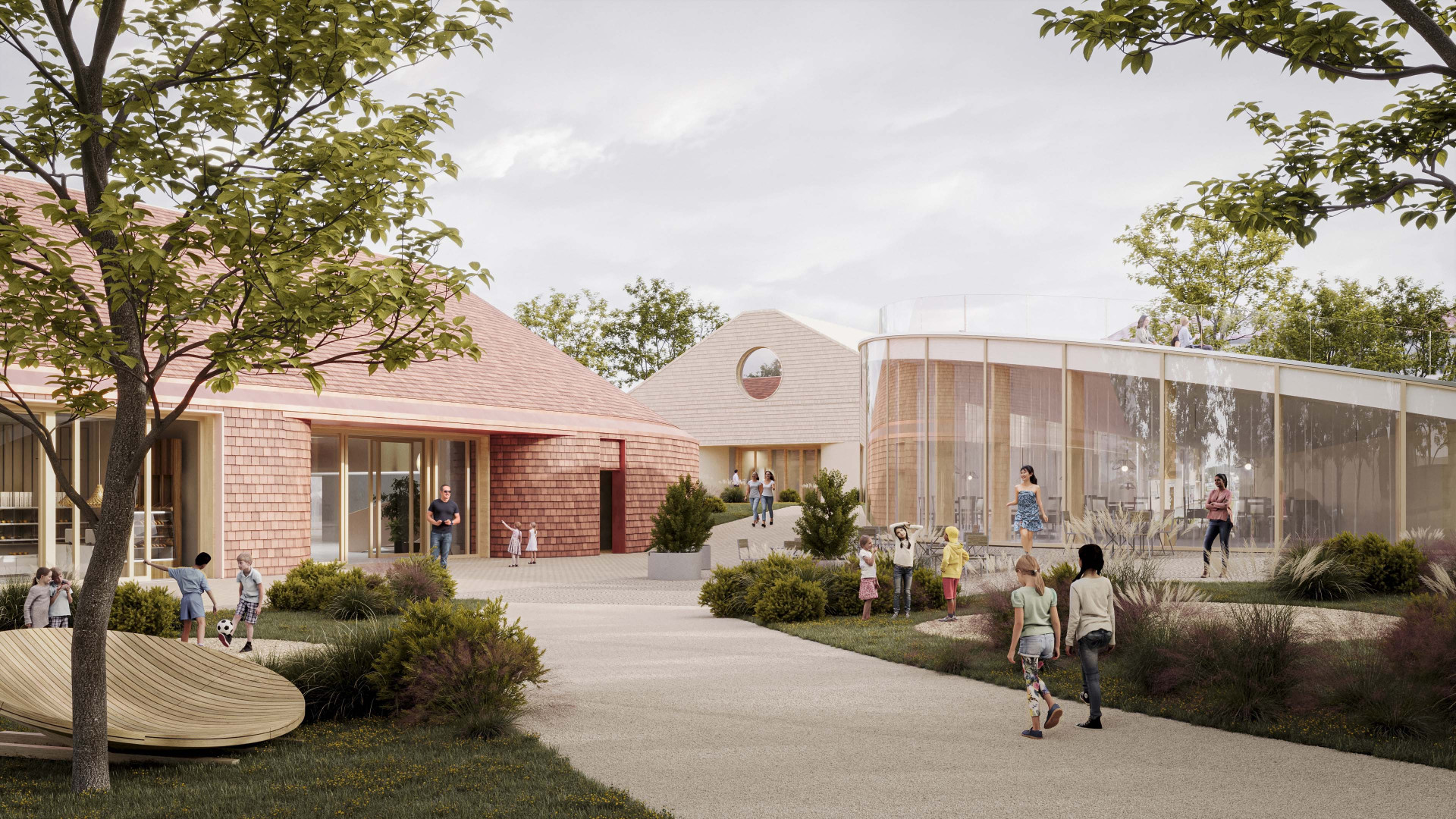
A view of the building entrances
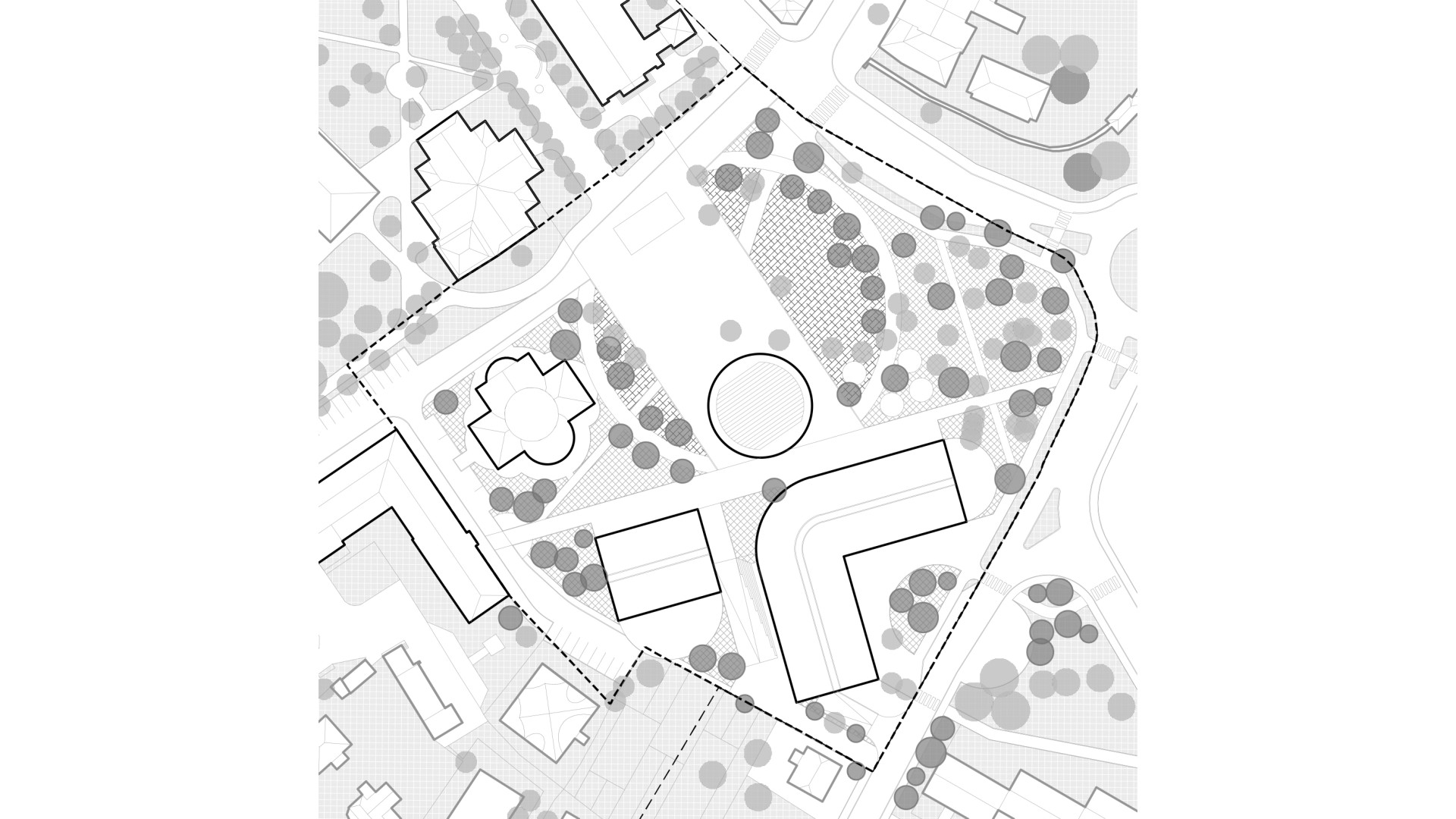
Vegetation composition
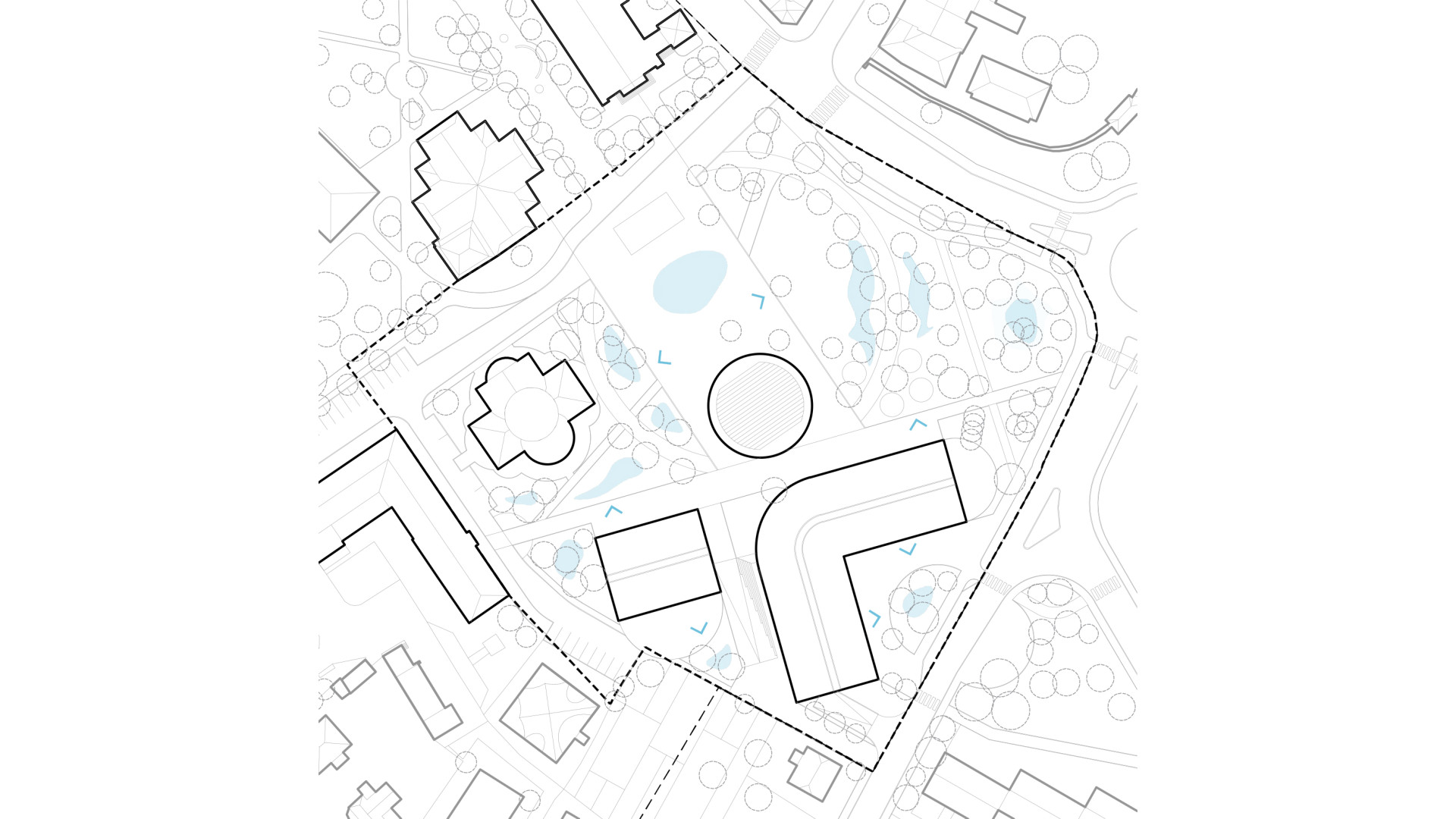
Water Management
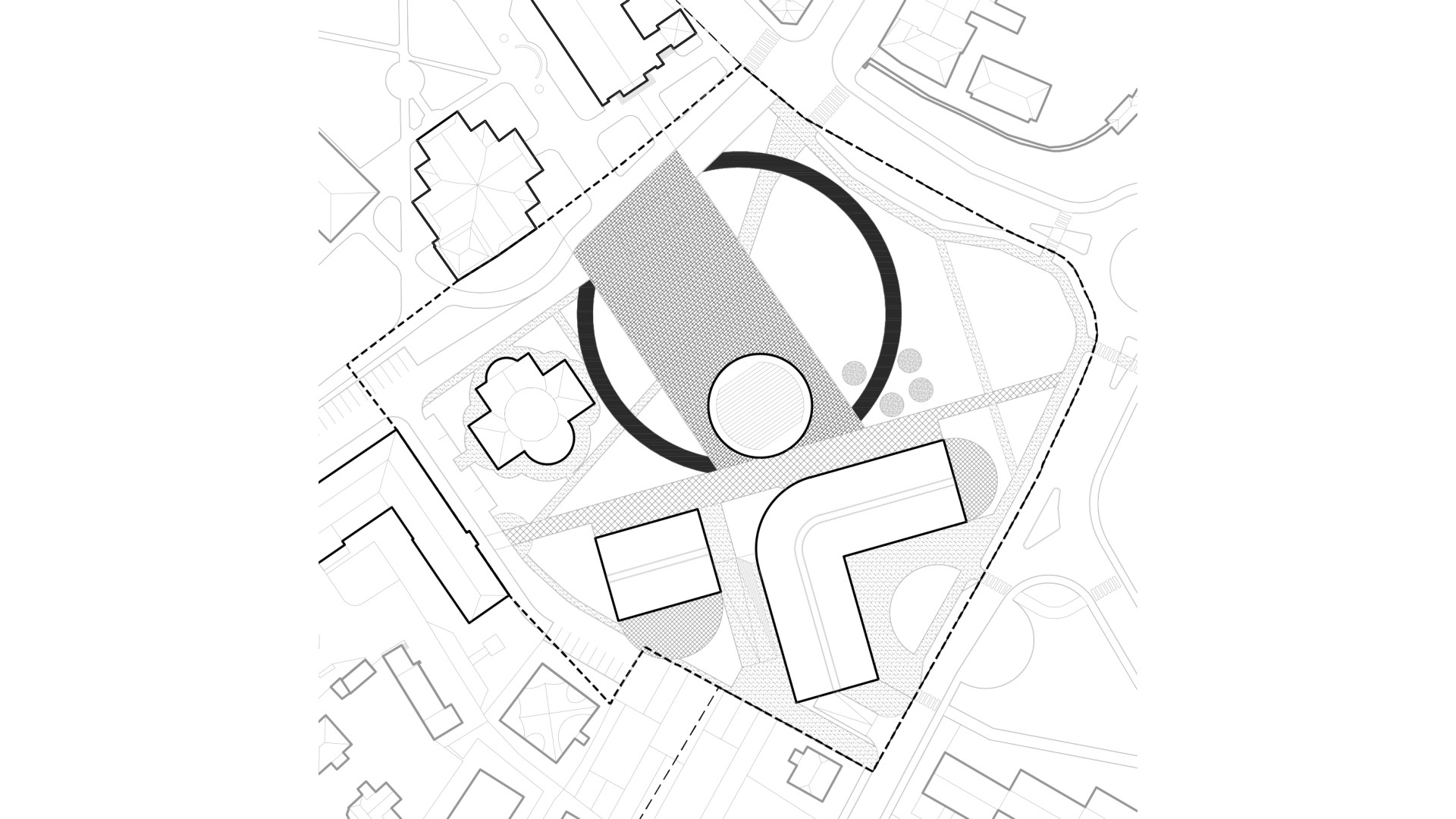
Public spaces
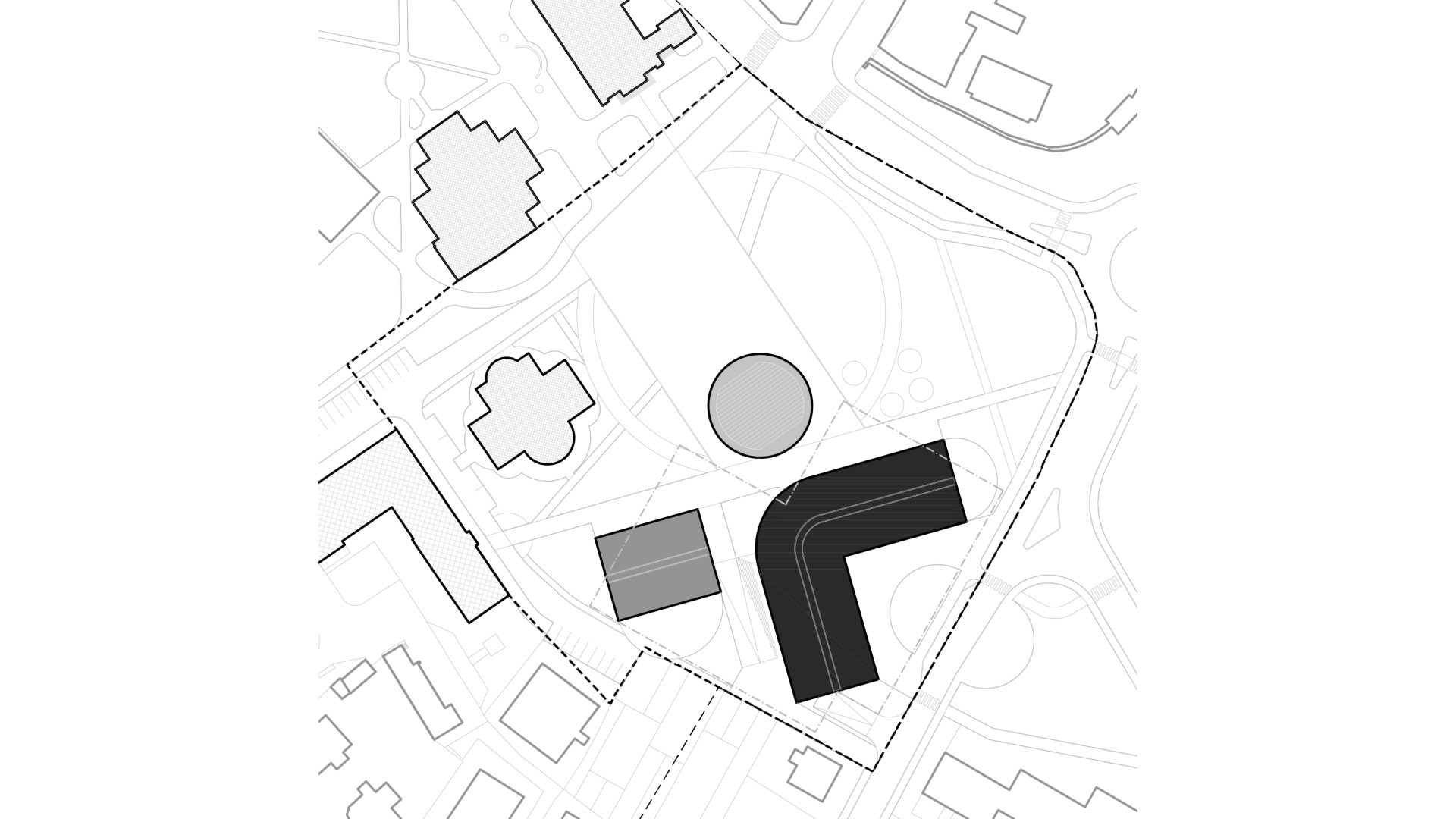
Functional division
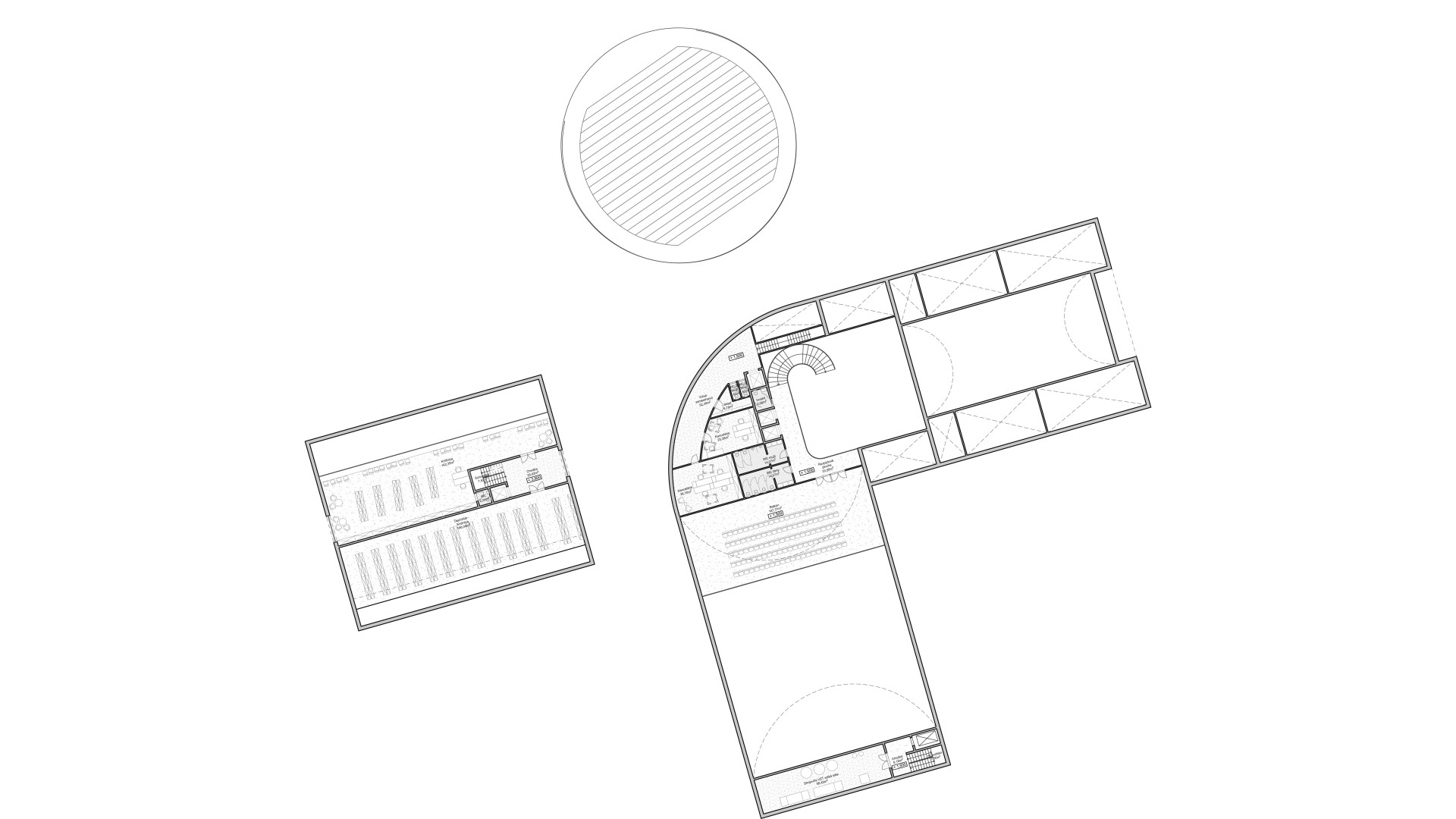
Floorplan of the second floor
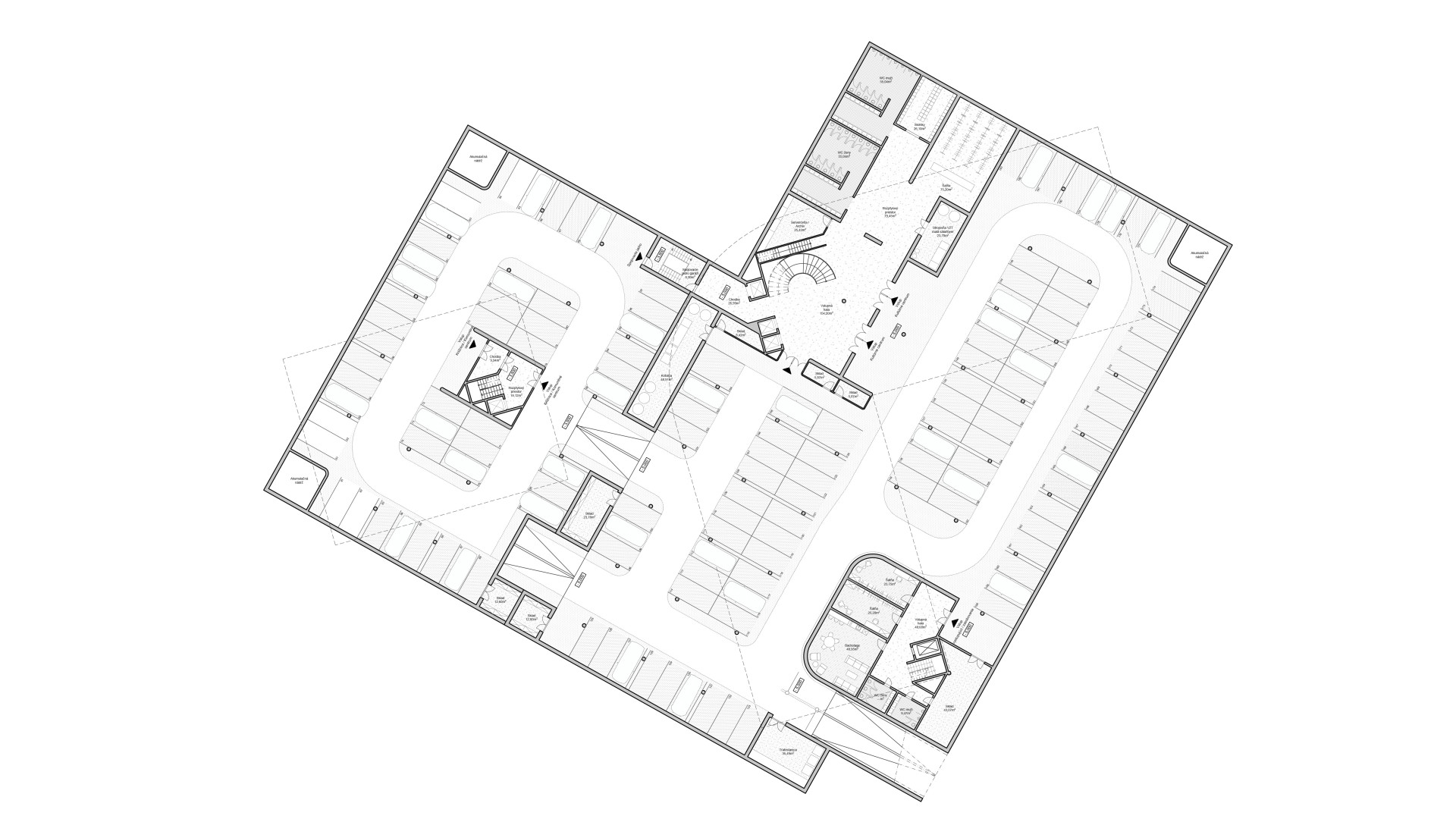
Underground floorplan
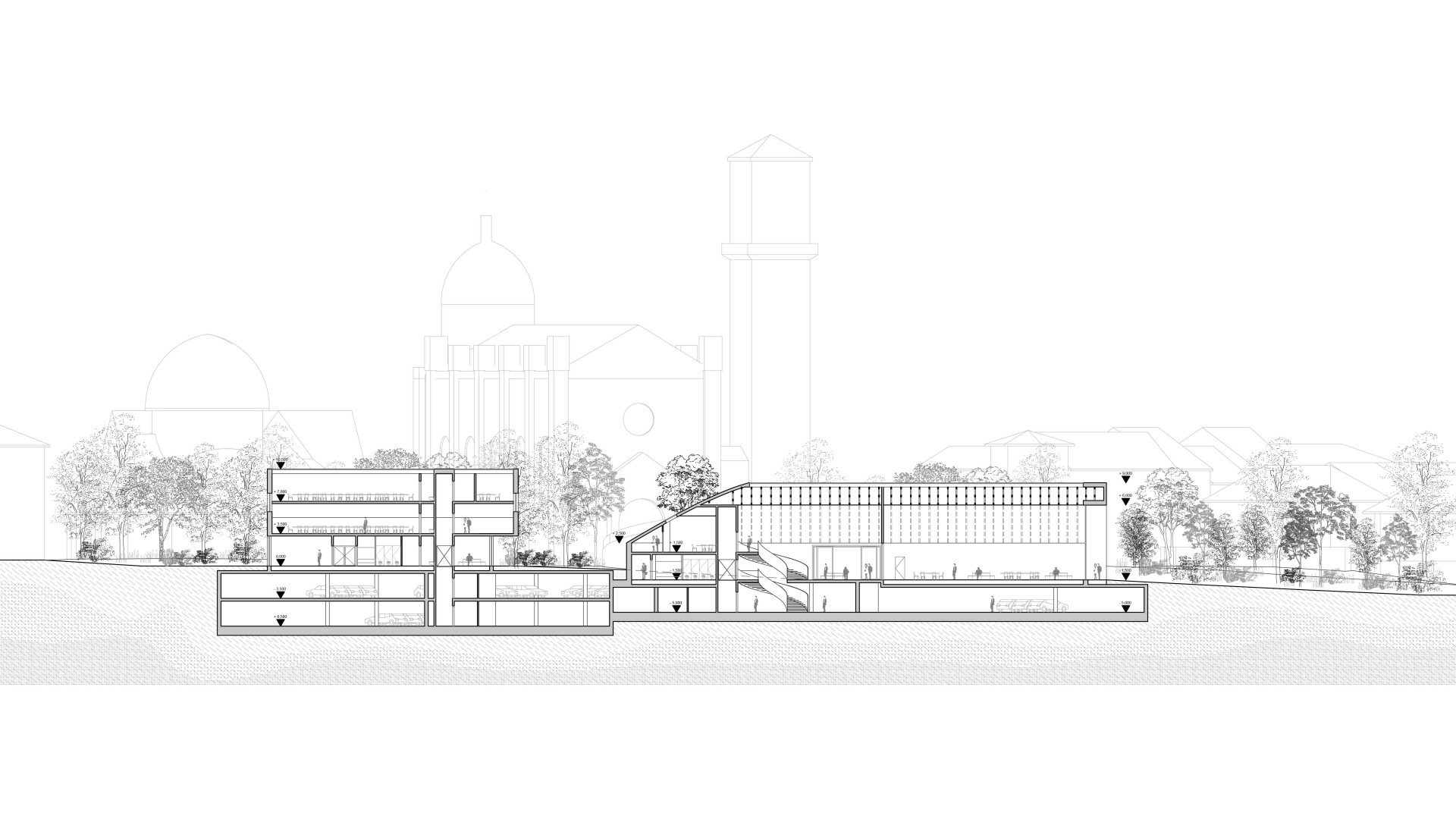
Section
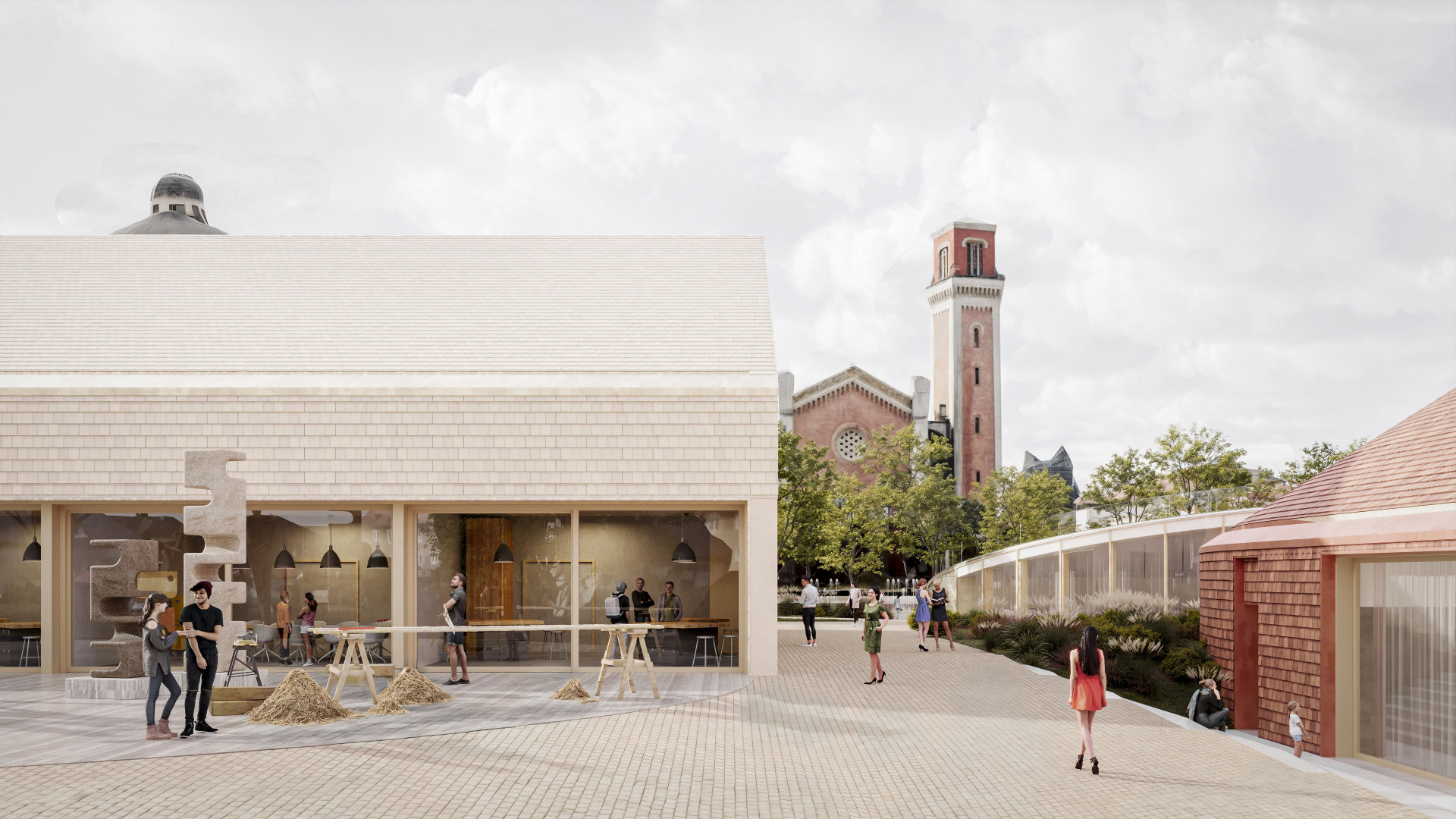
View of the area in front of the Community Center – workshop terrace
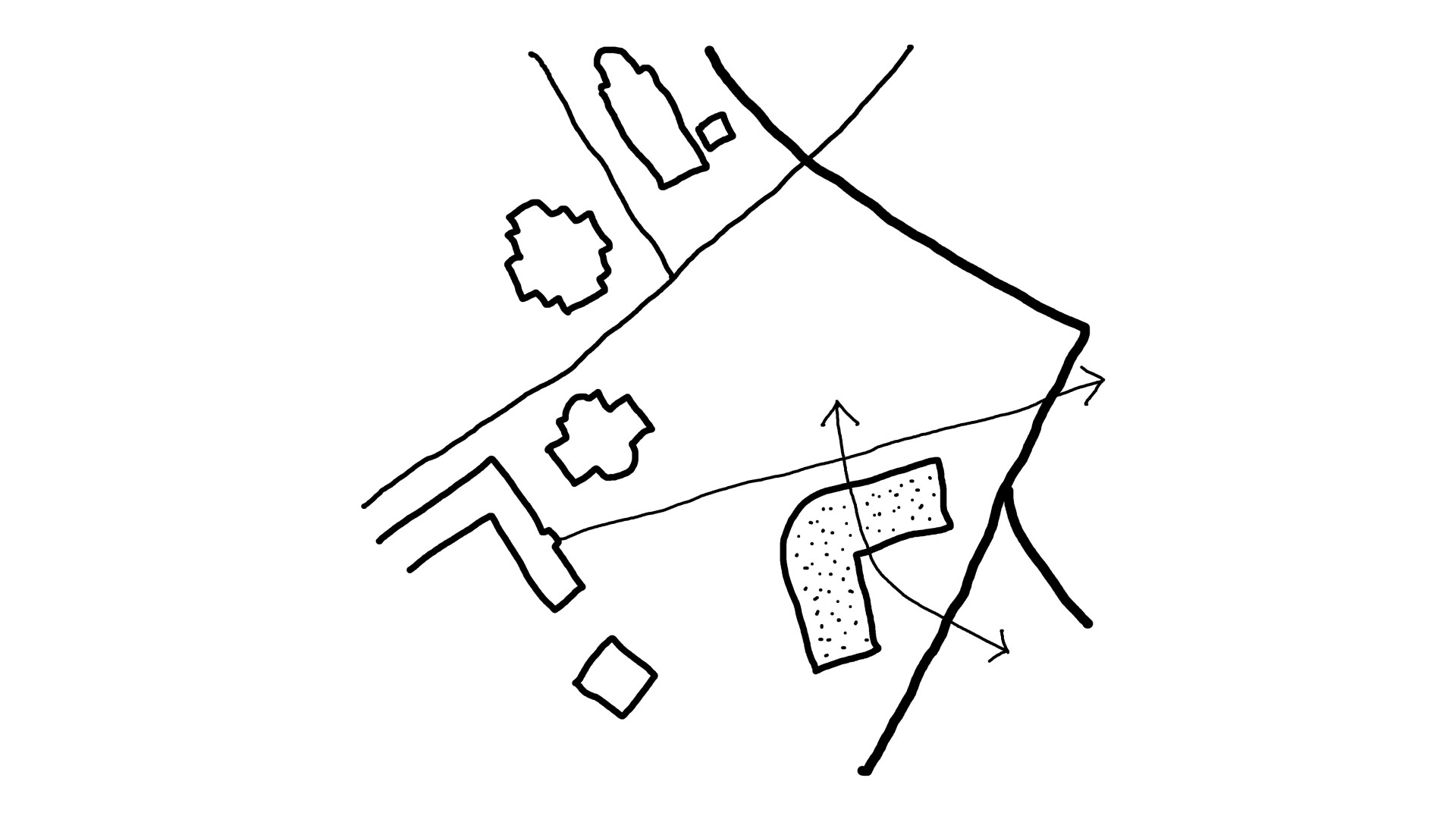
1. Stage
Diagonal connection. The promenade defines the orientation of the cultural and community building, which is framed by smaller interstitial spaces.
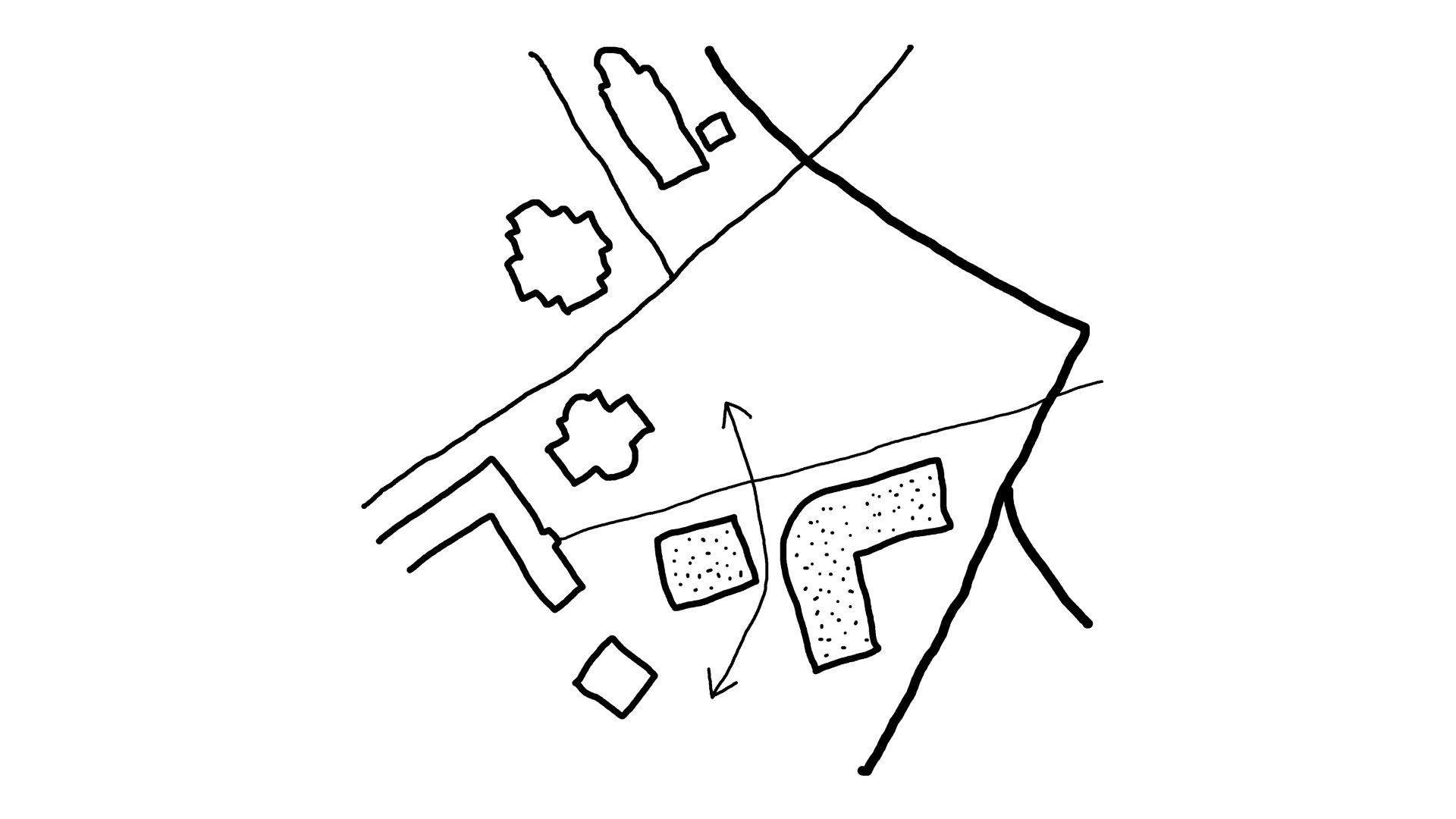
2. Stage
The structural system allows the cultural and community facility to be divided into two phases from a technical standpoint
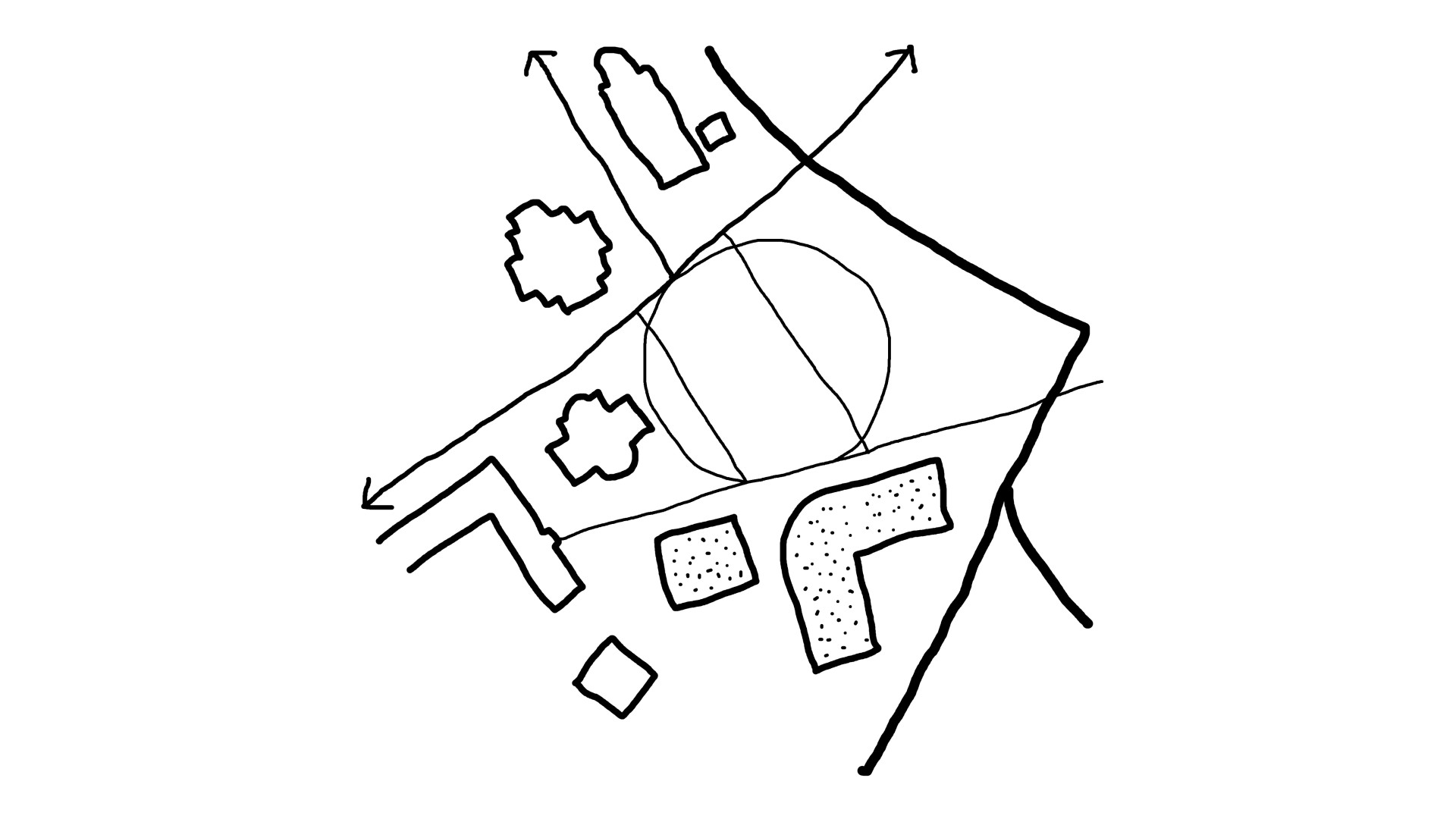
3. Stage
Construction of a central public space—a square and a connecting ring. Planting of greenery, traffic improvements, bike paths, street furniture, and small-scale architectural features.
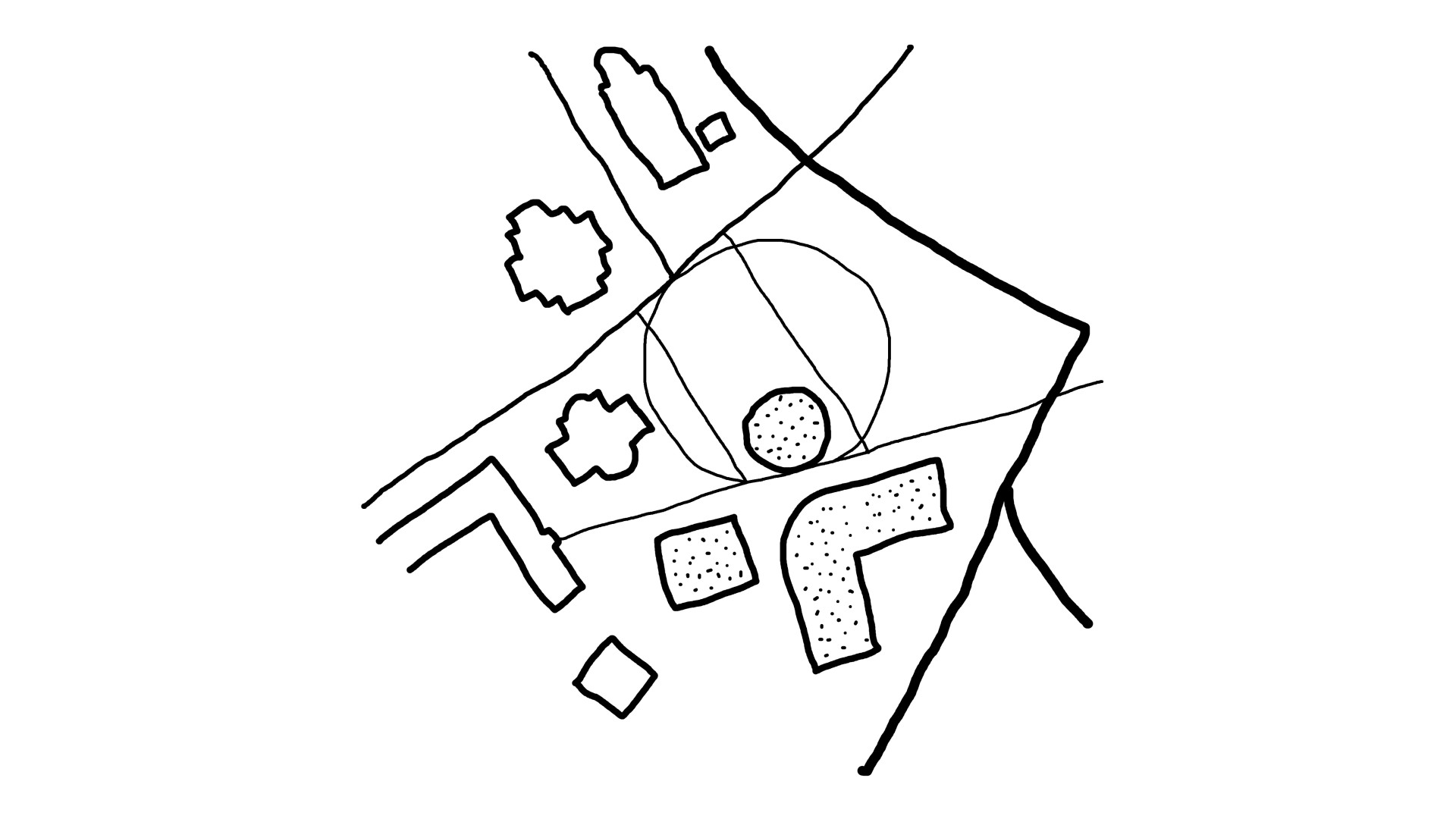
4. Stage
The bistro pavilion serves as a catalyst for activities, facing the park and featuring a rooftop terrace. Orientation: market/churches
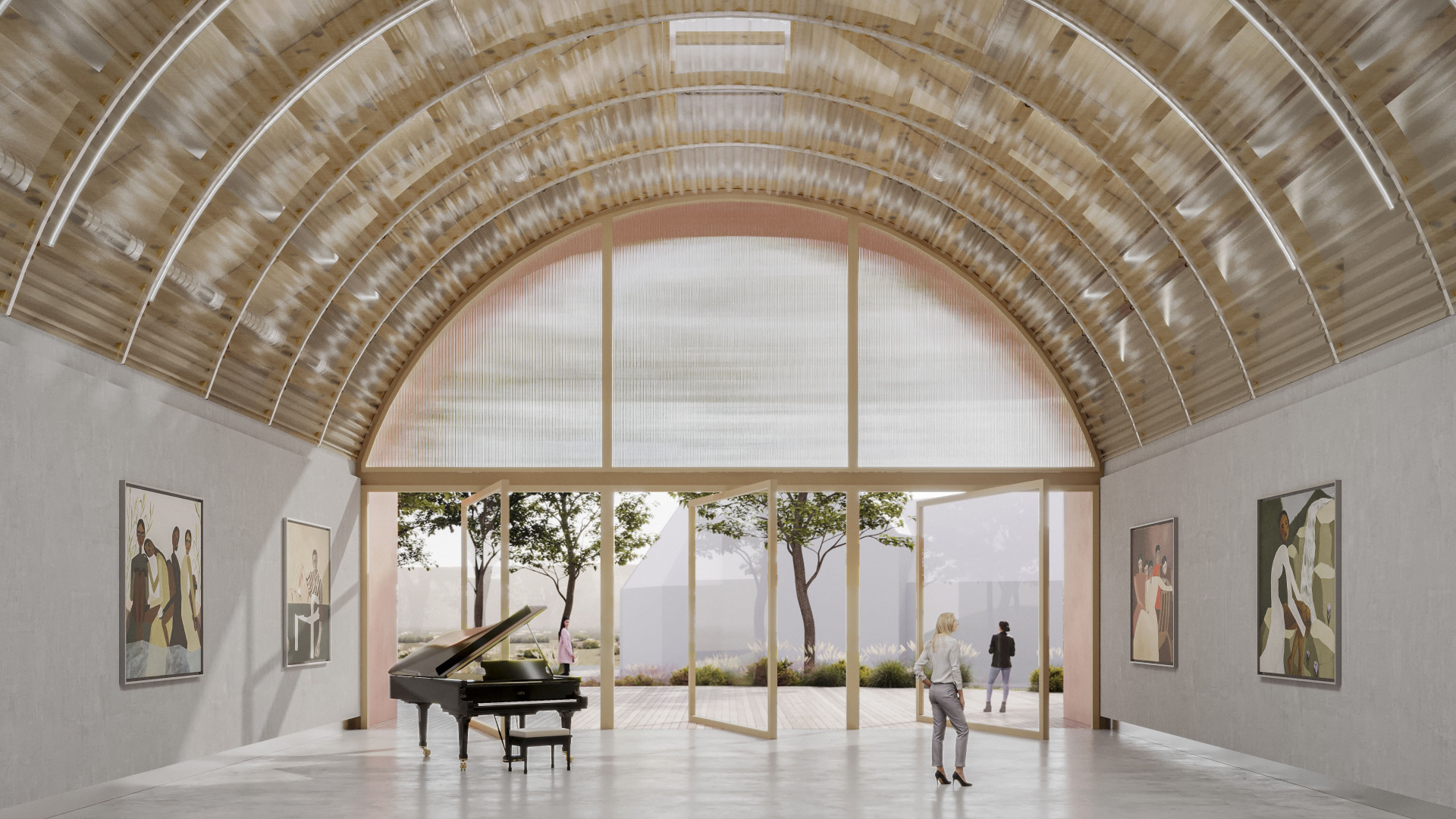
View from the small hall
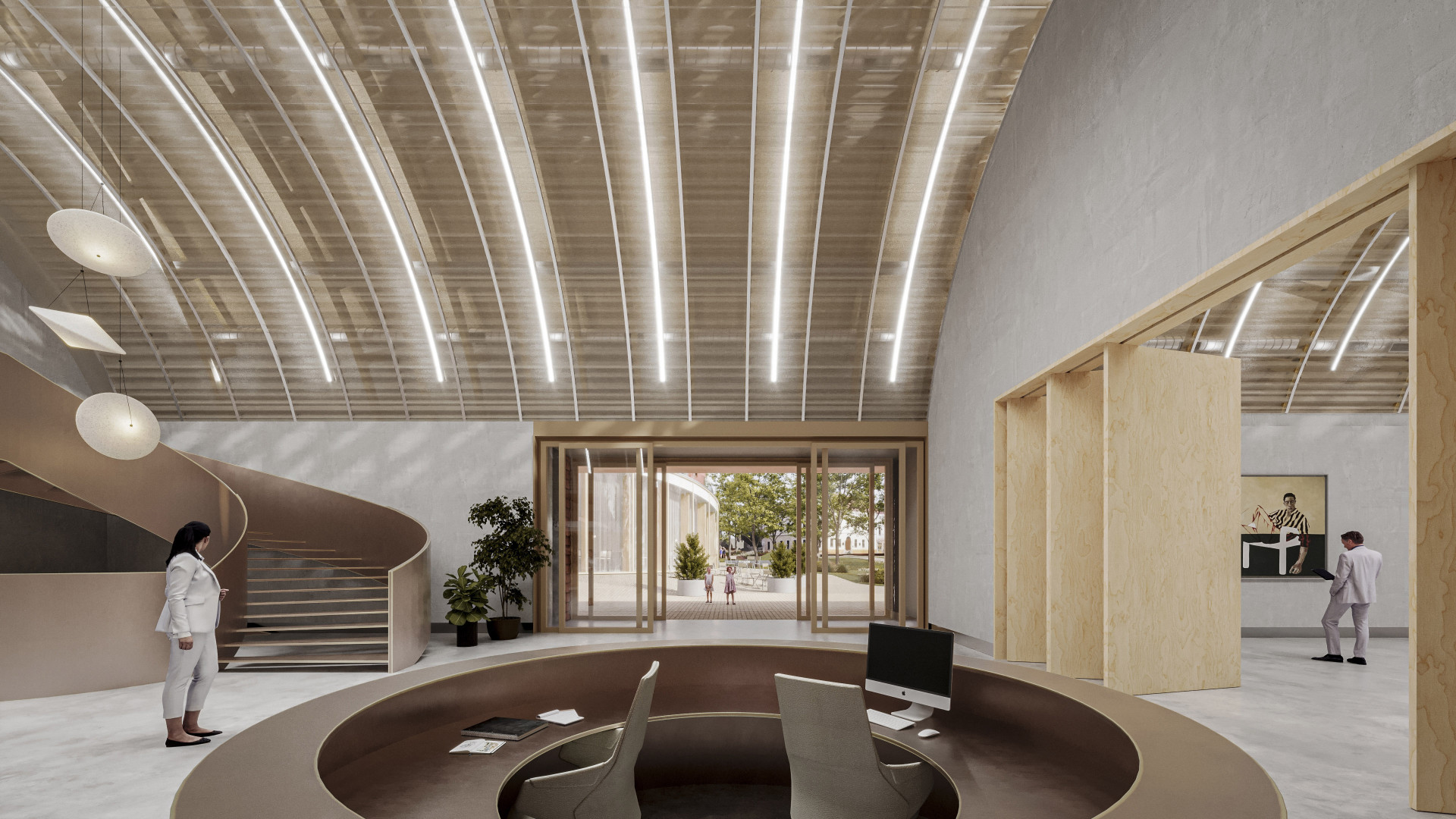
View from the foyer of the Cultural Center
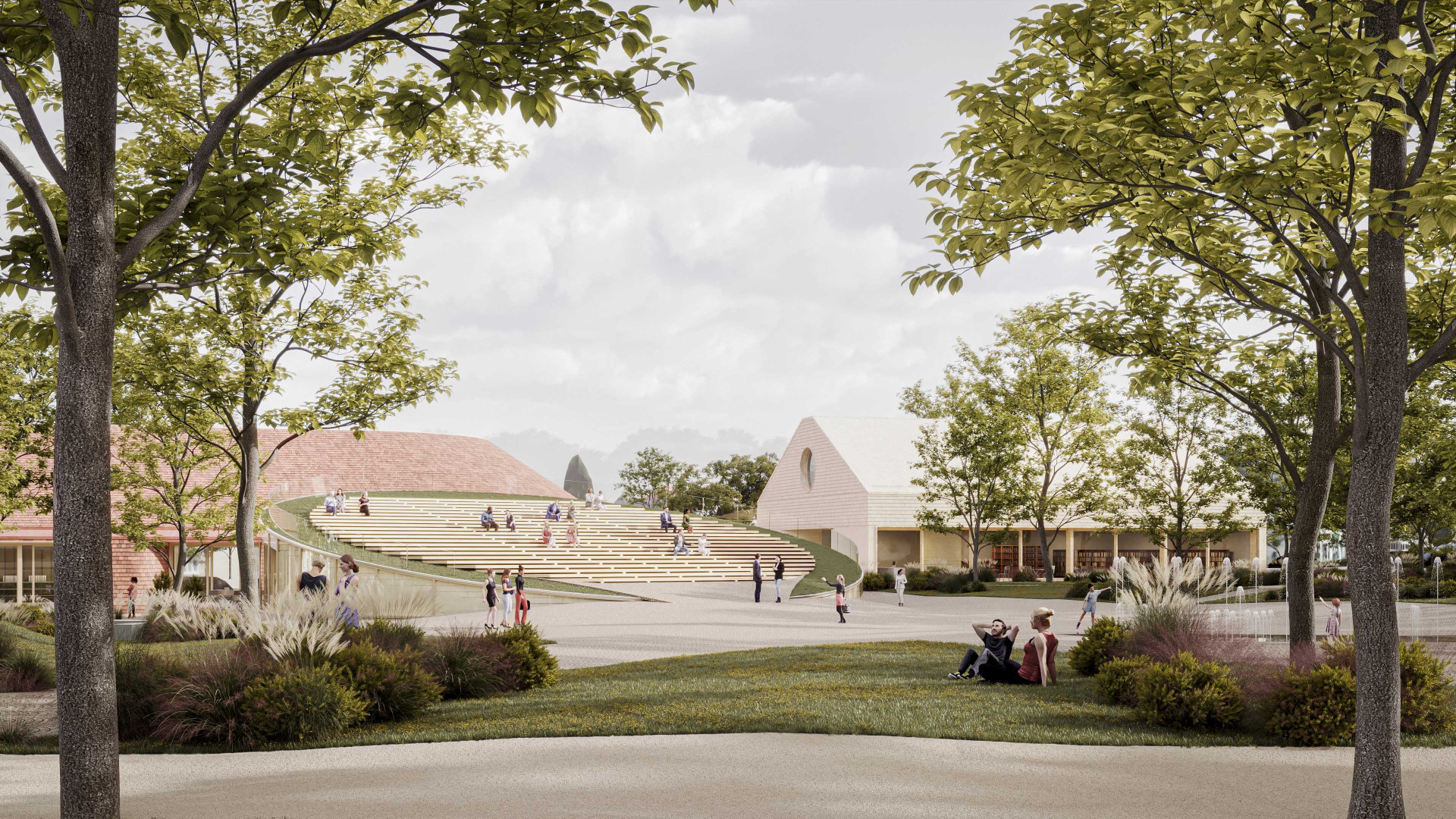
View of the central public space (Rínok) with the amphitheater’s covered seating area